
Recently I obtained my first region-free Japanese Blu-ray set, the 2023 blockbuster film Godzilla Minus One which was released in a variety of versions and included the equally acclaimed Godzilla Minus One: Minus Color variation, and it had me thinking about another movie that has a unique twist to it that continues to fascinate fans to this day.
One of the more important and unique collectibles I have had in my collection over the years was without a doubt my copy of the laserdisc of Superman IV: The Quest for Peace which was released in Japan by Tohokushinsha Video and King Video. Of the four films in the Christopher Reeve series, this particular version of IV has had the most interest to me on many different levels. So let’s break everything down and take a look at them in no particular order.
Right on the front cover we notice that this has the Cannon Films logo at the top of the laserdisc package, which informs us that this is the international version of the film. As we know, the film was cut down from its original 134-minute length after its disastrous sneak preview in Orange County, California, in the middle of June 1987 to a mere 89 minutes for its theatrical release only a month later in the United States and Canada from Warner Bros. However, visual effects supervisor Harrison Ellenshaw insisted that two additional scenes be restored to the film for the international release from Cannon Films, that of the tornado sequence and Superman saving Red Square in Russia from a nuclear attack, bringing the run time to 92 minutes in various markets including (but not limited to) the United Kingdom, France, Japan, Germany, and Australia, among others. This is confirmed by the censorship reel logs from the studios at the time of its release.
The subtitle on the front cover, however, implies something completely different. When translated from Japanese to English, it becomes known as “The Strongest Enemy”. Does it work better than “The Quest for Peace”? In my mind probably not, since it implies that the Nuclear Man is the central villain of the story. The German subtitle “Die Welt Am Abgrund”, also known as “The World at the Abyss”, has much more meaning and depth to it and would have worked a lot better had all of the film’s original nuclear subplots remained in the film.

The back cover of the laserdisc reveals even more interesting tidbits to us about this print of the film. As it is listed here, the running length of the film is 93 minutes, so what in particular makes this cut of the film even longer?
For one, it contains the two additional scenes that were not included in the U.S. version, the tornado sequence and the scene of Superman saving Russia from attack by the Nuclear Man. Both scenes are included here in their finished format with completed visual effects and music, and they would not be seen by U.S. audiences until April 1990, when the extended version of Superman IV was shown in numerous syndicated markets across the country, including WGN In Chicago, Superstation TBS in Atlanta, WPIX in New York City, and WDBD-TV 40 in my hometown of Jackson, Mississippi, among others. That syndicated print was distributed by Viacom, which used the Warner Home Video release and the international version as the template for the broadcast, although it trimmed some shots for advertising purposes. Of those four stations that I referenced, the print shown on Superstation TBS had the most complete print, with all of the footage from the film intact, especially the tornado sequence.
(What’s even more interesting about the syndicated version shown in Chicago and Jackson is that it included a TVNet trailer at the start of the broadcast that included a brief snippet of Clark and Lacy kissing in the back of a cab, and at the end of the trailer we clearly saw a crystalline version of the Superman IV logo, both of which were taken from the Cannon Films international trailer.)
Through the 1990s the fledgling Internet was besieged with rumors that the complete 134-minute cut was the final film shown on the now defunct SFM Holiday Network, but nobody could supply the proof, and it later turned out to be debunked by a number of hardcore Superman fans, including me. I believe that if ABC had acquired the rights to the film, we could have gotten that complete 134-minute cut extended and fully restored for television, as with the first three films. Then again, look what happened to Supergirl, and that turned out to be a messy affair. So there’s no way of knowing.
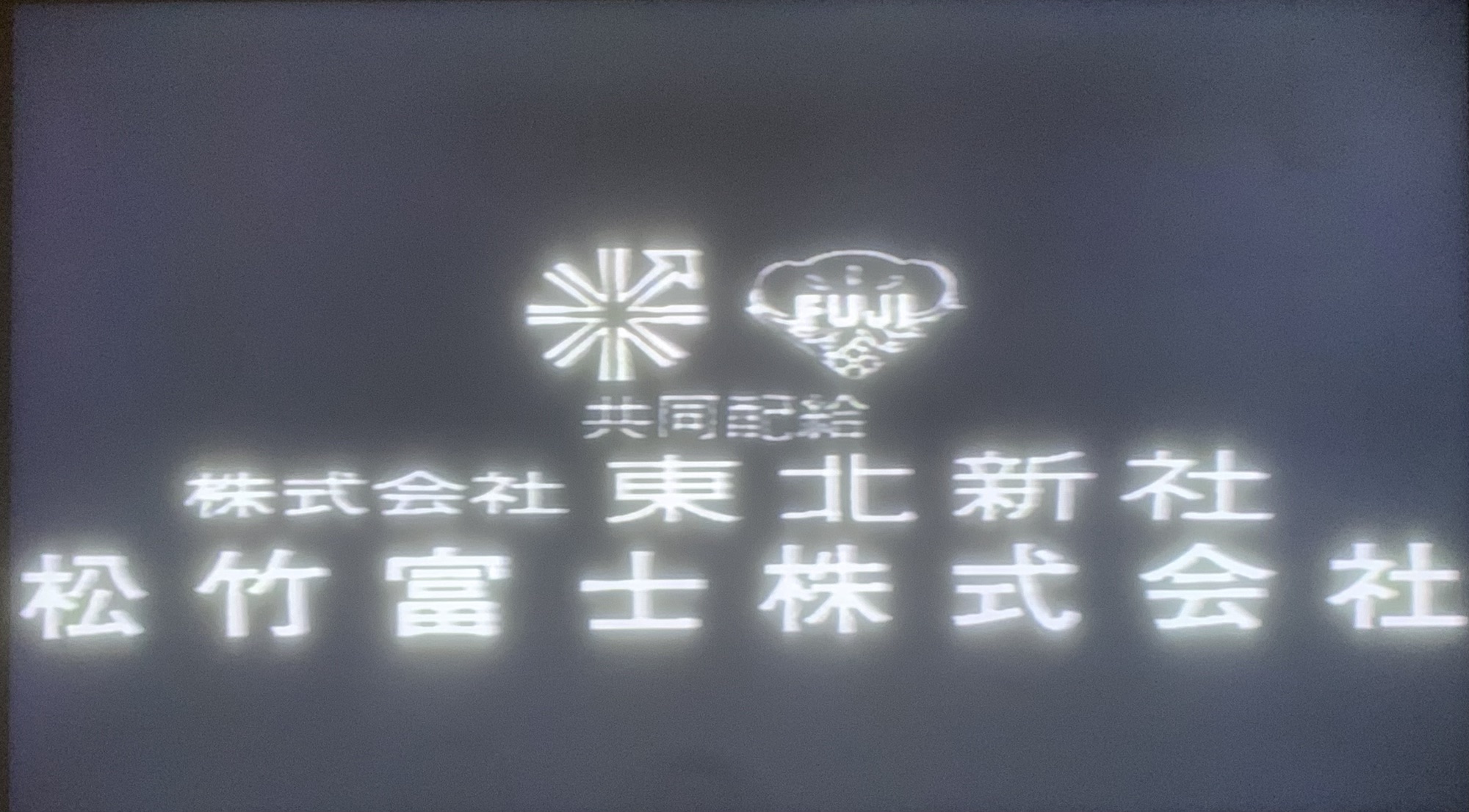
Also, the film contains some slightly different presentation credits, beginning first with the Japanese release credits, as the film was distributed in a joint partnership between Tohokushinsha and Shochiku Fuji Co., Ltd.
The film then continues with that beautiful crystalline logo in the Kanji script, along with the subtitle which translates into “The Strongest Enemy”. It is here that we learn that Natsuko Toda provided all of the translation for the film’s release in Japan.
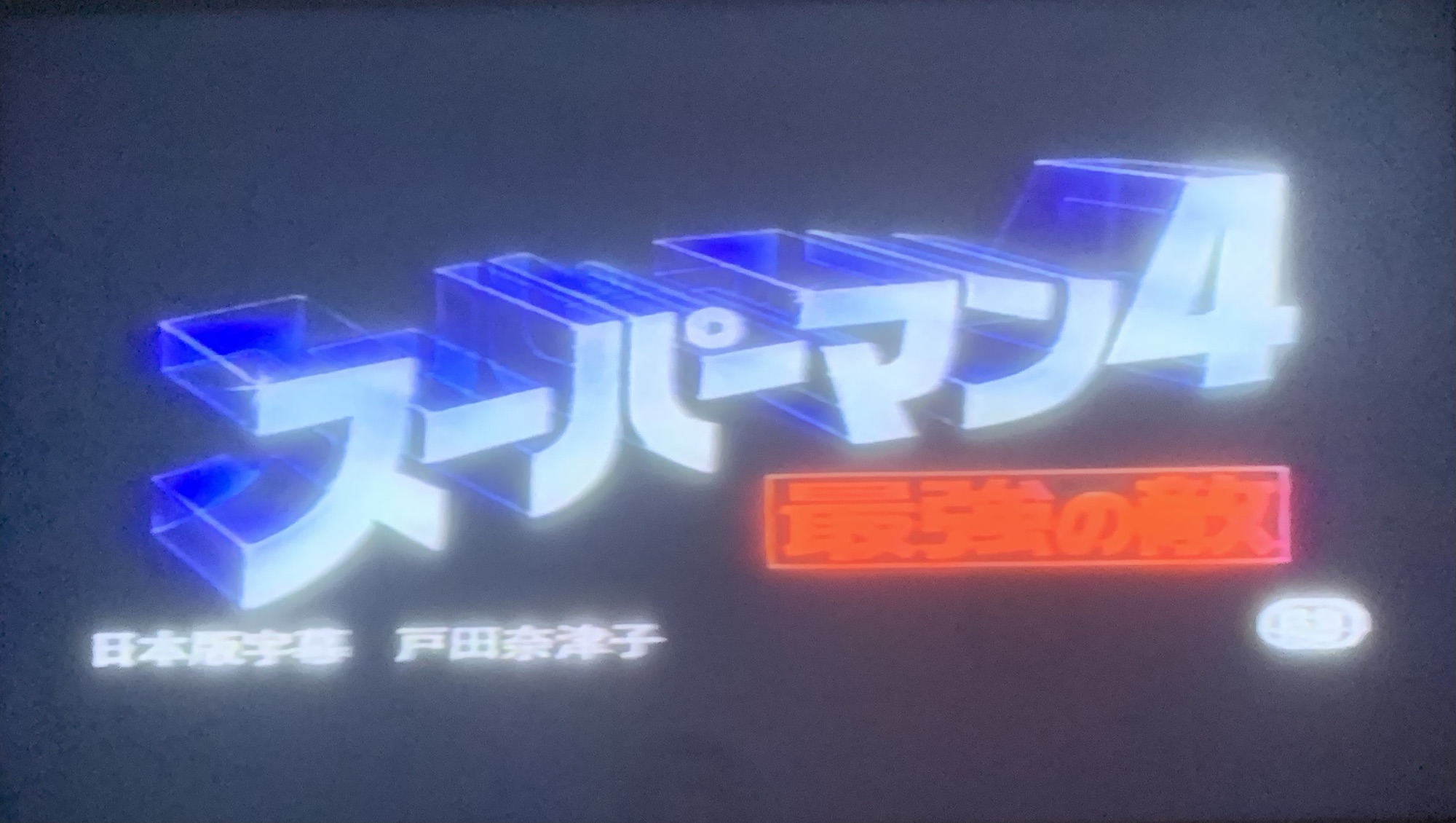
From there we have some slightly different main title credits which are different from the U.S. title credits. It’s not much different, and it’s done in the same style as the U.S. titles, but… well, you get the point.
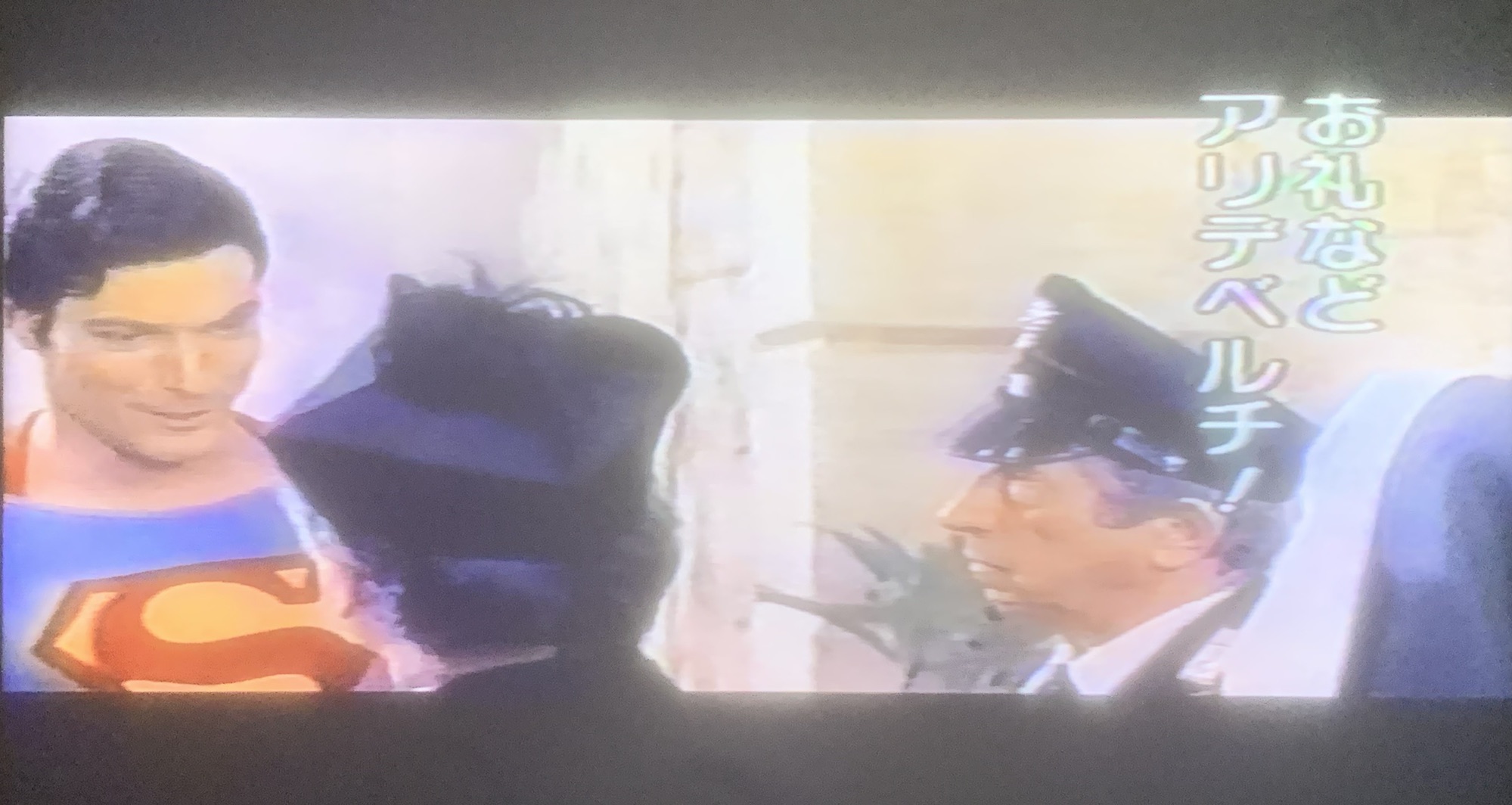
One of the more noticeable differences between the U.S. print and the Japanese print is that the foreign language subtitles are superimposed on the right side of the screen, as opposed to the bottom of the screen, as evidenced by these two screenshots of characters speaking in Russian and Italian, respectively.

I recently spoke with film reviewer and YouTube producer Oliver Harper, who confirmed some key points about the Japanese laserdisc release that I had known about for years. First, the entire print of the film is presented in a 2:1 aspect ratio, as opposed to its original 2:35:1 aspect ratio, so you’re not getting all of the image in the Japanese print. Oliver also confirmed that the laserdisc sourced a PCM surround track, which gives the film a flat sounding quality, as opposed to the Dolby stereo track on the U.S. laserdisc from 1987 and the later 2.0 tracks on the DVD and Blu-ray versions and the Dolby Atmos track on the 4K UHD release. He also pointed out that the print used for the laserdisc is quite dirty in places.
In addition, Oliver pointed out that the Japanese laserdisc contains no chapter stops whatsoever, as opposed to the 16 chapter stops on the Warner laserdisc (seven for the A side, nine for the B side), which makes jumping to the added scenes pointless.
Furthermore, there’s a difference between the dividing points between the Warner and Japanese laserdiscs. On the Warner laserdisc, the A side ends with the scene of Clark saying to the weight trainer, “No pain, no gain?” before switching sides and beginning the B side with the Nuclear Man arriving at Luthor’s penthouse. On the Japanese laserdisc, the A side ends with Luthor saying, “Nobody’s perfect,” and the B side begins with the double date.
As for the tornado and Russia scenes, these clips are the best quality I’ve seen them, even better than on the Japanese laserdisc and without the superimposed subtitles at the bottom of the screen.
The film ends with another title card indicating that King Records Co., Ltd., assisted Tohokushinsha and Shochiku Fuji with the selling of the film to the Japanese markets.

But that’s not all. The laserdisc also includes a great looking insert about the history of the character and the development of the film, as written and compiled by Hiroshi Temiya (who also provided the text for the back cover of the laserdisc).
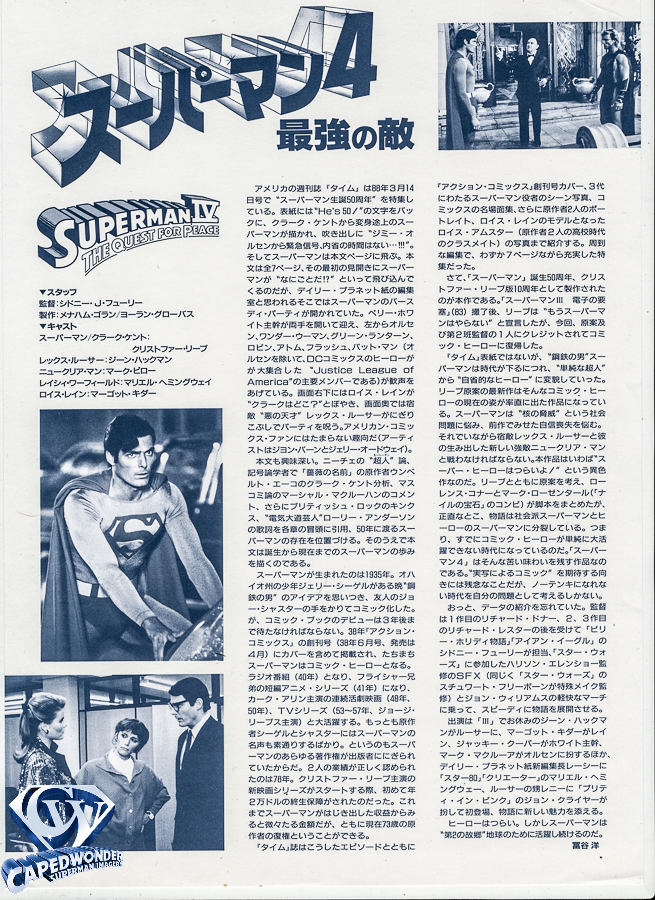
The commentary is filled with a nice collection of anecdotes about Superman’s 50th anniversary in 1988, the creation of the character, his history in television and film, and, of course, some background information on the making of Superman IV. What’s also interesting is that the writer mentions that Superman III had its own unique Japanese subtitle as well: The Electronic Fortress! That definitely has some serious vibes to it that we didn’t get here in the States.
For a time it would be the only source of the film in widescreen format until May 2001, when Warner Home Video finally released the U.S. theatrical version on DVD in its original 2.35:1 widescreen ratio. And then there was the 2006 deluxe edition with lots (but not all) of the deleted scenes. Then the 2011 Blu-ray. Then the 2023 4K release that I’m not going to go into, which was, for lack of a better word, a mess.
I have fond memories of that laserdisc and finding it toward the end of the 1990s on eBay for my home video collection. When I got married and moved from Mississippi to Alabama in early 2005, nearly all of my things—all of my books, videos, CDs, and nonessentials—were put in storage in Huntsville for several months until my then-wife and I could find a house to move to. Once we were able to get the house and get everything moved out of storage, then the fun of unpacking began. Out of all of my things that I moved into my office, unfortunately only one thing did not survive the transition from Mississippi to my new home in Alabama, and that was the Superman IV Japanese laserdisc. It had broken cleanly in half somewhere in the move. Ouch. And with nothing to play it on, it meant having to throw it away. I’m thankful for a buddy of mine who got me a replacement copy for my collection years later—not the laserdisc, but at least a watchable copy.
I remember a conversation years ago I had with music restoration producer Mike Matessino, one of the top guys in the business and a really cool guy to boot, and he told me that Warner Home Video should have given fans the international extended version on DVD. And in 2018, my friend Jim Bowers told me that the Warner Archive had a copy of the complete 134-minute cut in their vaults, along with the extended TV cut of Superman II. We don’t know the quality of those prints, but I believe they are complete. To this day fans continue to ask the Warner Archive to release them on Blu-ray, as they would be huge sellers.
Until that happens, any overseas copies of Superman IV are highly sought after by fans and collectors, and the Japanese laserdisc is the most complete version of the film that is out there to date. One day, that bad boy is coming back to my collection again.
(Some of the photographs used in this blog are courtesy of CapedWonder.com.)
 Superman: The Blog