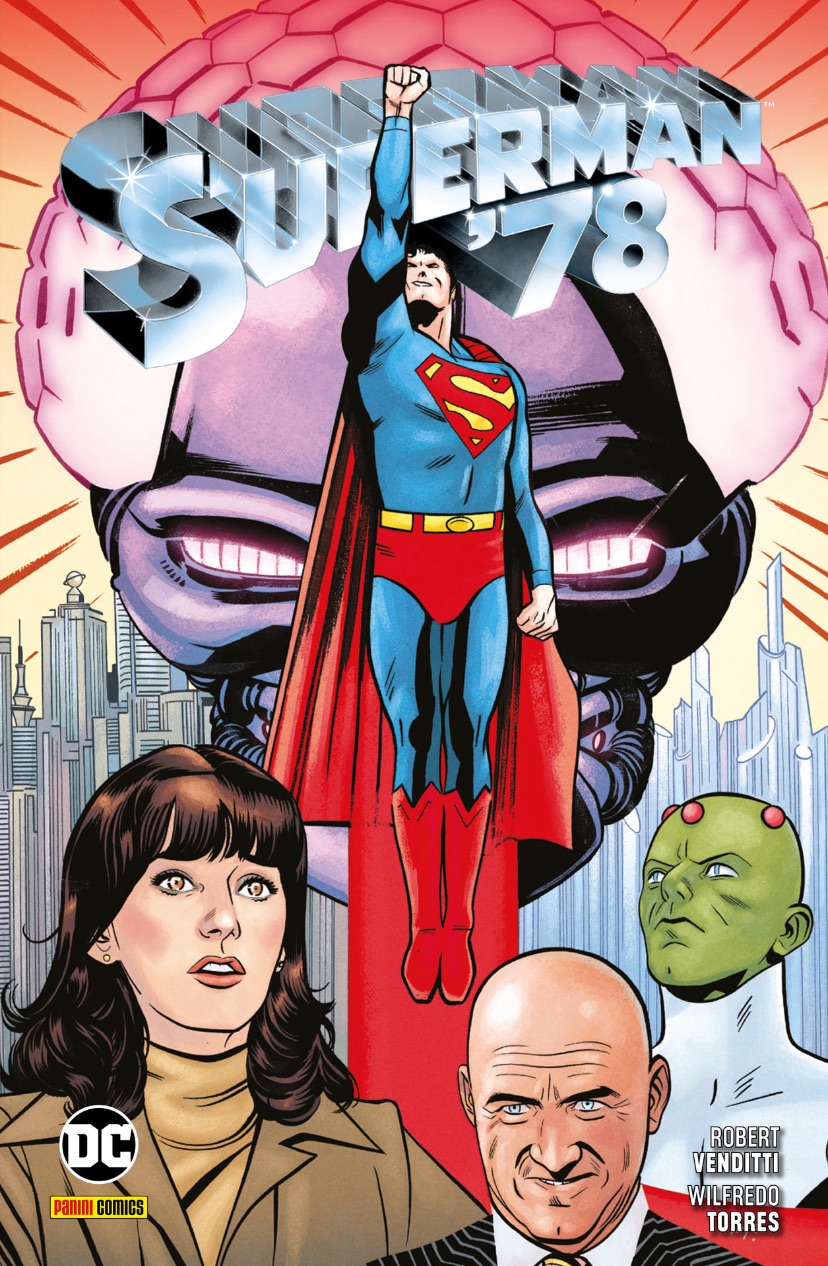
In my previous two blogs on the Plaion Pictures Blu-ray release of Supergirl, one of the highlights of the release was the text commentary by writer Christian Heiss. It’s not the first time that I’d read some of his writing. When I came across the German language version of the Superman ‘78 graphic novel collection for the Kindle last year, I had noticed that he had written the foreword and afterword for the collection.

So here’s what he had written, translated from German to English (forgive me if some of the translations are a little off, but I’ve done my best to clean it up where needed):
STELLAR CINEMA BLOCKBUSTER
In 1978, an advertising slogan on a cinema poster announced to all cinema-goers: “You’ll believe a man can fly.” Above it, next to the Superman emblem, a red-yellow lightning bolt could be seen racing through the cloudy sky. The message was so simple, so successful was its message. Superman: The Movie became a huge box office hit that year and caused a major renaissance for the Kryptonian hero.
Even today, director Richard Donner’s film is still considered an exemplary blueprint for the film adaptation of a superhero comic, despite some outdated passages. With lots of humor, action sequences and special effects at the height of the time and a huge portion of heart, the film thrilled its audience. Last but not least, the actors were a guarantee of success: Christopher Reeve embodied the kind superhuman just as convincingly as his bumbling, shy alter ego Clark Kent; Gene Hackman clearly enjoyed his portrayal of the diabolical Lex Luthor; and Margot Kidder was one of them as Lois Lane clever and passionate reporter like she is in the (comic) book.
The film spawned three sequels up to 1987 – and now this comic sequel, which follows directly on from the events of Superman: The Movie. So let’s go back to the year in which the Man of Steel first appeared in Metropolis… and in this volume he encounters a new danger from the depths of space!
Have lots of fun with it!

NOT EVERYTHING IS GREAT
As already noted in the foreword, Superman: The Movie was the box office hit of 1978. In that year, the film was at number 1 on the US Box Office hit list for 13 weeks in a row. But even though the final product was so successful and is still considered the classic superhero film par excellence, the story behind it was riddled with numerous problems and obstacles.
It started with the financing of the project: Ilya and Alexander Salkind, the film’s main producers, had secured the rights to a Superman film adaptation, but had difficulty finding a studio that would cover the production costs and subsequent distribution of the film wanted to take over. In the end, the two of them financed the filming of Superman: The Movie out of their own pockets until a distributor was finally found, Warner Brothers, who brought the film into cinemas – and the Salkinds certainly made a profit from this huge hit that covered their expenses more than once exceeded.
The producers initially hired Guy Hamilton, who had previously directed various films in the James Bond series, as the director. But when production was relocated from Rome to England for cost reasons, it became clear that Hamilton could not stay in his homeland for a long period of time due to problems with the British treasury. A suitable replacement was finally found in Richard Donner, who had previously directed the successful horror thriller The Omen.
The self-confessed Superman lover first looked at the script. The Salkinds had spared no expense and effort and hired best-selling author Mario Puzo (The Godfather) to write the script, whose work resulted in a colossus of 500 pages of script – enough material for five films! Donner had the script, which he also found too slapdash, quickly revised and tightened up by experienced author Tom Mankiewicz.
For the role of Superman they initially looked for a well-known name such as Paul Newman, Robert Redford or Steve McQueen, but here too Donner had a different opinion than his producers: because he believed that a star would overshadow the part of the steel hero, they finally signed him the largely unknown theater actor Christopher Reeve – a direct hit! But before Reeve could slip into the Superman costume, he first had to build up some serious muscle mass. He did this under the guidance of bodybuilder David Prowse – who, funnily enough, was involved in a major hit film in a different role: In the films of the first Star Wars trilogy, Prowse was under the dark guise of arch-villain Darth Vader!
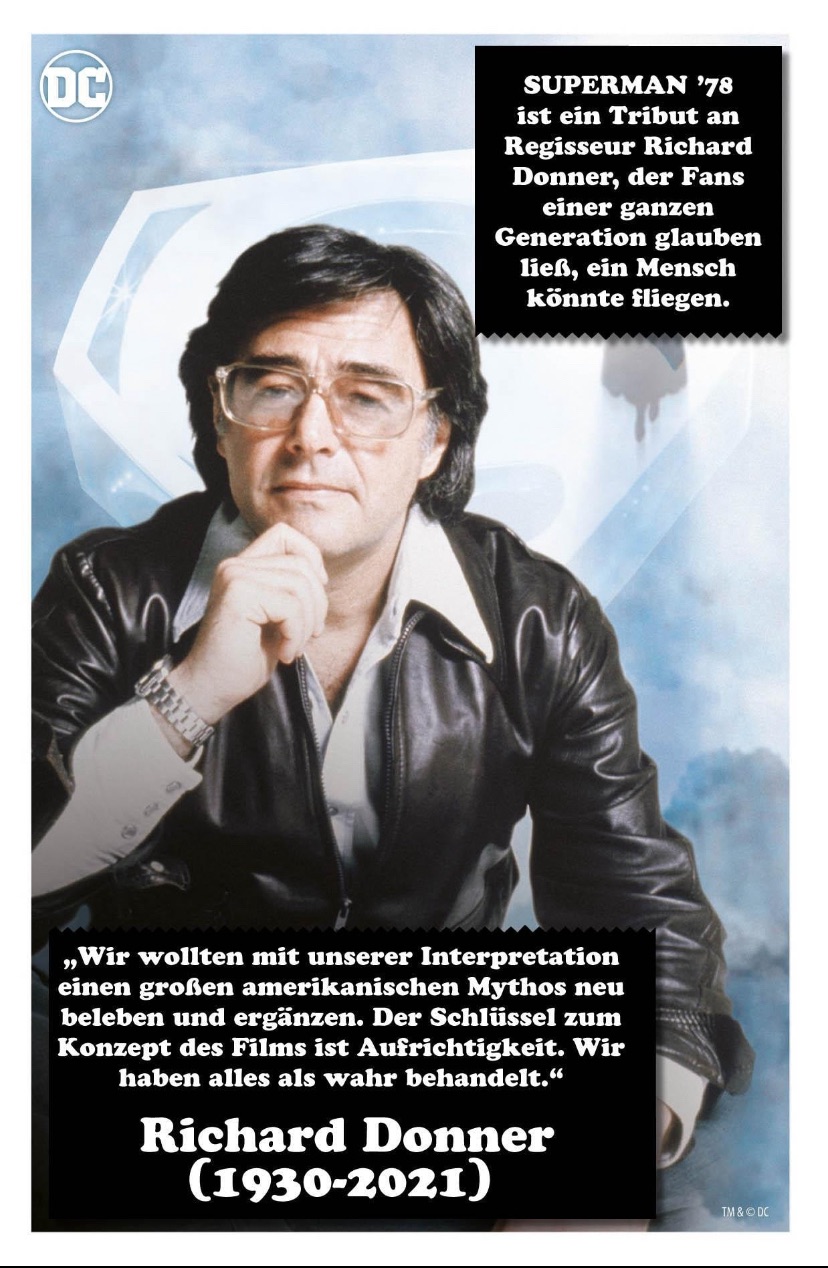
While we glean nothing new from Christian Heiss’ foreword and afterword, he clearly knows his facts about the development of the Superman films, even if they are both brief for the graphic novel.
These are the only new additions to the growing collection of the Superman ‘78 series, along with the English, Spanish, and Korean versions, and with the recent completion of Superman ‘78: The Metal Curtain, don’t be surprised when we see a compilation of the second series in one volume in multiple languages. And when that happens, I’m sure we’ll get another great commentary from Christian Heiss again.
 Superman: The Blog